Is Buddhism vegan? It is one of the most searched questions at the intersection of spiritual practice and compassionate living — and the answer, as with most things in Buddhism, is more nuanced and more interesting than a simple yes or no. Let us explore buddhist vegan ethics.
The short answer is that Buddhism does not mandate veganism, but its core ethical teachings point so clearly toward plant-based living that many practitioners — and a growing number of scholars — argue that veganism is the most consistent expression of Buddhist values in the modern world.
What the First Precept Actually Says
The first of the Five Precepts — the foundational ethical guidelines of Buddhist practice — is the commitment to refrain from taking life. In Pali, the ancient language of the earliest Buddhist texts, this is expressed as panatipata veramani sikkhapadam samadiyami: I undertake the training rule to abstain from the destruction of life.
Notice that the precept does not say “human life.” It says life — pana, meaning breathing creatures, sentient beings. The Buddha was explicit that this precept extends to animals. The question is not whether animal suffering matters in Buddhism — it clearly does — but whether the First Precept requires us to avoid participating in it through our food choices.
What the Buddha Ate — and Why It Matters
Buddhist monks in the Theravada tradition — the oldest surviving school of Buddhism — traditionally eat whatever is placed in their alms bowl, including meat. This is sometimes cited as evidence that the Buddha himself did not teach veganism.
However, the historical context is important. The Buddha and his monks depended entirely on the lay community for food. Refusing offerings — including meat — would have been seen as deeply disrespectful and would have severed the relationship between the monastic and lay communities that Buddhism depended upon to survive.
Furthermore, the Lankavatara Sutra — one of the key texts of Mahayana Buddhism — records the Buddha explicitly discouraging meat eating, stating that it is incompatible with compassion. The Chinese, Vietnamese, and Korean Buddhist traditions, drawing on this and other Mahayana texts, have practised vegetarianism and veganism for centuries.
The Modern Context Changes Everything
Perhaps the most important consideration is one the Buddha could not have anticipated: the scale and nature of modern industrial animal agriculture.
In ancient India, a monk accepting a piece of meat in his alms bowl was not participating in a system that confines billions of sentient beings in conditions of chronic suffering from birth to death. Today, when we purchase animal products from supermarkets, we are doing precisely that — creating economic demand for systems that cause deliberate, systematic harm to conscious beings on a previously unimaginable scale.
The Buddhist principle of karma — the understanding that our intentional actions have consequences — applies directly here. When we choose plant-based foods, we withdraw our support from these systems. When we choose animal products, we sustain them. The karmic implications, viewed through the lens of Buddhist ethics, seem clear.
Interdependence and the Web of Life
Beyond the question of individual karma, Buddhist teachings on interdependence — pratityasamutpada, or dependent origination — offer another powerful perspective. All life is woven together in an infinite web of mutual dependence. The suffering of a factory-farmed animal is not separate from our own lives — it is part of the same web of existence that includes us.
When we truly understand interdependence, the question “is Buddhism vegan?” begins to dissolve. A more natural question emerges: given what we know about animal consciousness, given the availability of plant-based food, given our understanding of karma and interdependence and non-harm — how could a committed Buddhist practitioner choose otherwise?
A Path, Not a Rule
Buddhism is not a religion of commandments. The Five Precepts are training rules — guidelines for practice, not laws enforced by divine authority. The Buddha trusted his followers to examine the teachings carefully and apply them with wisdom and discernment.
Plant-based living is not a requirement imposed from outside. It is a natural flowering of genuine Buddhist practice — the point at which the compassion cultivated on the meditation cushion extends fully to the beings on our plate.
Is Buddhism vegan? Perhaps the better question is: what does your practice ask of you?
The Compassionate Table explores these questions across ten contemplative chapters — from ahimsa and interdependence to karma, loving-kindness, and impermanence. Download the PDF or Kindle edition for €3.
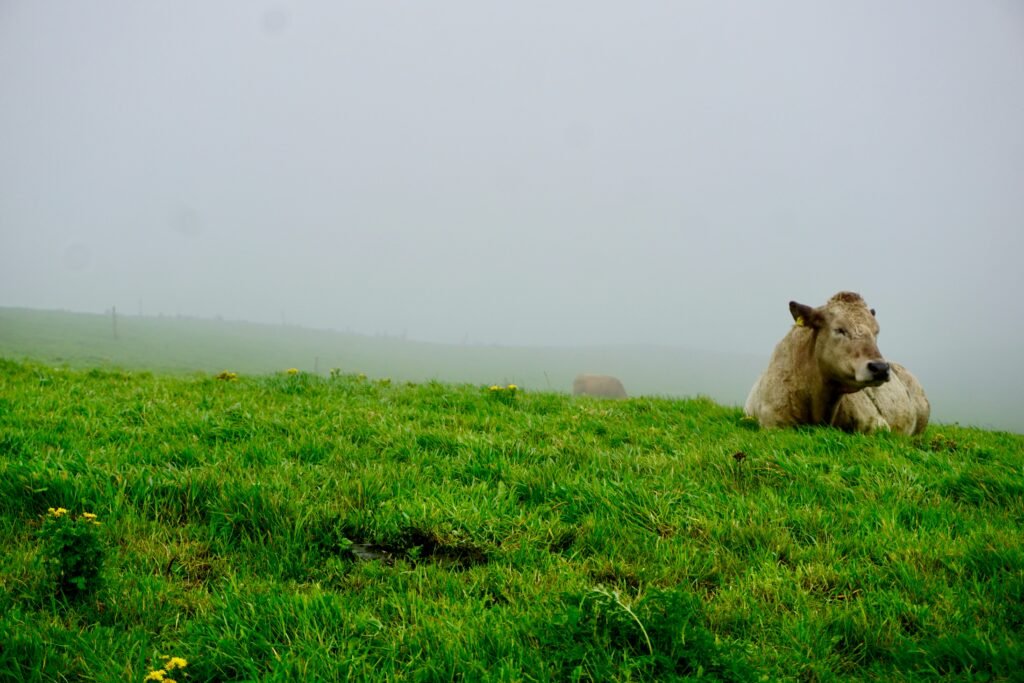
The Photo used in this `Is Buddhism Vegan?´ post is by Meredith Isabelle on Unsplash

Explore all nine chapters of The Compassionate Table.
Instant download · Secure checkout via Stripe