There is a piece of CO2 pig stunning practice footage that, once seen, is difficult to put aside. Pigs enter a small metal cage — a gondola, in the industry’s terminology — and begin to descend. Within seconds, a hoarse screaming can be heard. The pigs press into one end of the container as if trying to escape something. They convulse. They gasp.
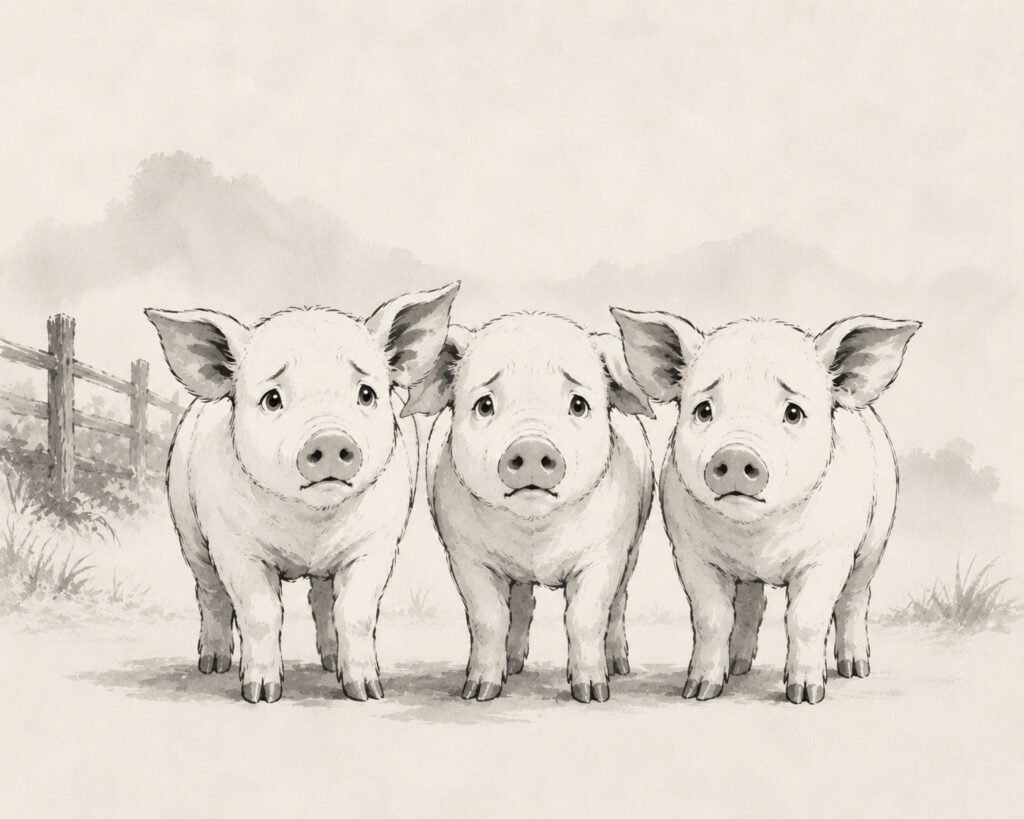
This is not footage from a rogue operation or a distant jurisdiction with weak animal welfare laws. This is standard practice in British abattoirs. It is how 90% of pigs in England and Wales are killed before they reach your plate — a figure that has risen from 52% in 2013, growing steadily as large mechanised slaughterhouses have displaced smaller facilities. Nine million pigs a year, in the United Kingdom alone.
This week, animal welfare organisations including the RSPCA and Compassion in World Farming have renewed urgent calls on the UK government to launch a formal consultation on banning the practice. The story is not new — the UK government’s own welfare advisory body recommended a phase-out more than twenty years ago. What is new is the weight of scientific evidence now behind those calls, and the government’s own commitment, made in its Animal Welfare Strategy published at the end of 2025, to ban CO2 stunning of pigs subject to consultation.
This post is an attempt to explain clearly what the science says, what is happening in the policy arena, and what it means for anyone who eats, or is considering whether to eat, animal products.
What CO2 Pig Stunning Actually Does
Carbon dioxide stunning works by lowering groups of up to forty pigs into a pit where CO2 is continuously pumped at high concentrations. The gas renders the animals unconscious before they are killed. The industry has argued for decades that this method has welfare advantages: pigs can be processed in groups, reducing handling stress, and the system requires minimal human contact.
What the industry argument consistently obscures is what happens in the seconds before unconsciousness.
A peer-reviewed study published in March 2025 in Frontiers in Veterinary Science, co-authored by veterinary scientist Jenny Mace and Professor Andrew Knight of the University of Winchester, reviewed the available evidence comprehensively. Its conclusion was unambiguous: exposure to high concentrations of CO2 causes pain, fear and respiratory distress in pigs before they lose consciousness. The gas dissolves in the mucous membranes of the respiratory tract to form carbonic acid, a process that is acutely painful. The pigs are, in the most precise scientific sense of the word, conscious of their suffering until the moment they are not.
The UK’s Animal Welfare Committee — an independent expert panel that advises the governments of England, Scotland, Wales and Northern Ireland — reached the same conclusion in October 2025, describing the suffering caused as “avoidable pain, distress or suffering” and recommending that the industry transition to alternative methods “as quickly as possible” and within a maximum of five years.
The committee’s language is carefully measured, as expert panels tend to be. But “avoidable” is the operative word. The pain being inflicted is not a regrettable necessity. It is a choice — a commercial choice, made because CO2 stunning is cheaper and faster than alternatives.
Twenty Years of Knowing and Not Acting
What makes this story particularly difficult to absorb is the timeline. The Farm Animal Welfare Council — the predecessor to the current Animal Welfare Committee — first recommended phasing out CO2 pig stunning in 2003. The scientific evidence has not changed in its fundamental direction in the two decades since. What has changed is that the practice has become more widespread, not less.
In 2013, 52% of pigs in England and Wales were stunned with high-concentration CO2. By 2022 it was 88%. Today it is 90%. A welfare crisis identified by government’s own advisors twenty-two years ago has, in that time, nearly doubled in scale.
The reasons are not mysterious. CO2 systems allow large throughput. They are compatible with the industrialisation of slaughter that has accelerated since the early 2000s. The economics of industrial meat production have consistently outweighed the welfare evidence — not because the evidence was absent, but because the political and commercial will to act on it was.
What the Science Recommends
The good news — and there is some — is that alternatives exist. The Animal Welfare Committee’s October 2025 report, and the peer-reviewed literature that preceded it, point clearly toward inert gases as the most practical near-term replacement. Argon, nitrogen and helium do not cause the acid pain associated with CO2 pig stunning because they act as simple asphyxiants rather than chemically reactive gases. Pigs lose consciousness without the distress phase that characterises CO2 exposure.
A 2025 study in Frontiers in Veterinary Science concluded specifically that argon “poses the fewest welfare problems for pigs, and the fewest obstacles for industry in terms of implementation,” noting that argon, like CO2, is heavier than air and would therefore be compatible with the existing pit infrastructure used in current CO2 systems (Mace and Knight, 2025).
The industry’s counterargument — articulated by the National Pig Association and others — is that no commercially viable alternative is yet ready for large-scale deployment in the UK. The AHDB commissioned a report in early 2026 estimating the costs and practical implications of transition, concluding that any shift would need careful management to avoid unintended consequences. These are legitimate practical concerns. They are not, however, arguments for inaction.
A Welfare Crisis Hiding in Plain Sight
There is a particular quality to the public conversation about animal welfare in food production — a tacit agreement that certain things will not be examined too closely. The CO2 pig stunning issue exemplifies this. The footage exists. The science has been clear for decades. The government’s own advisors have recommended action since 2003. Yet the practice has expanded rather than contracted, and the consultation that might lead to change has been promised but not yet launched.
The RSPCA’s director of advocacy put it plainly this week: “No one wants to think about animals being slaughtered, but we cannot ignore how the food on our plates is produced, or we have no hope of progressing farmed animal welfare.”
That sentence contains more than a policy argument. It contains an observation about the psychology of meat consumption that Buddhism has understood for a very long time: that the suffering embedded in our food systems persists, in large part, because we have collectively agreed not to look at it.
What This Means for How We Eat
It would be easy — and dishonest — to present the CO2 pig stunning issue as a problem with a technical solution. Swap CO2 for argon, update the infrastructure, and the welfare crisis is resolved. That framing is convenient because it requires nothing of us as consumers. The system adjusts, we continue eating as before, and our conscience is salved.
But the CO2 issue is a symptom, not a cause. It is the visible tip of a much larger structure — one in which billions of sentient beings are processed at industrial scale, in conditions designed around efficiency and cost rather than around the nature and experience of the animals themselves. The pig in the gondola is conscious, social, intelligent, emotionally complex. The system she is in was not designed with any of those qualities in mind.
Buddhist ethics do not ask us to wait for governments to legislate compassion. They ask us to examine honestly the gap between our values and our actions, and to move — gradually, imperfectly, but sincerely — in the direction of less harm. The evidence about CO2 stunning is one more piece of information that, once encountered, makes that examination harder to avoid.
The question it puts to each of us is simple: knowing this, what do I do next?
The Compassionate Table explores the Buddhist case for compassionate eating across ten chapters — available as a PDF or ePub for €3 at thecompassionatetable.com. If this post has prompted questions, Chapter One — The First Precept — addresses the principle of ahimsa and what it asks of us directly.
References
Animal Welfare Committee (2025). Opinion on the Welfare of Pigs at the Time of Killing: High Concentration CO2 Stunning. UK Government. October 2025.
Mace, J.L. and Knight, A. (2025). Pig welfare and ethical considerations during abattoir stunning: CO2 vs. alternative methods such as argon gas. Frontiers in Veterinary Science, Vol. 12. Pig Welfare and Ethical Considerations
Sindhøj, E., Lindahl, C. and Bark, L. (2021). Review: Potential alternatives to high-concentration carbon dioxide stunning of pigs at slaughter. Animal, Vol. 15(3), 100164. https://doi.org/10.1016/j.animal.2020.100164
Food Standards Agency (2024). Slaughter Sector Survey: England and Wales. FSA.
RSPCA (2025). Campaign Against Carbon Dioxide in the Stunning of Pigs. rspca.org.uk
Defra (2025). Animal Welfare Strategy for England. December 2025.
Explore all nine chapters of The Compassionate Table.
Instant download · Secure checkout via Stripe